Solutions
Buy
   Home  » Solutions  » Checklists  » How to Save Family Budget During the Crisis
Live Chat Software for Business
Crisis Survival Checklists
Business Checklists
Holidays Checklists
Event Checklists
Household Checklists
Miscellaneous Checklists
Project Management Checklists
Employee Management Checklists
Company Activity Checklists

VIP Task Manager Professional

Play VIP Task Manager demo Play Demo >>

  LOGIN

<< username >>
<< password >>
Remember me on this computer
  Forgot your password?
  Register

  TESTIMONIALS
"...This is an excellent program. I'm so glad that I stumbled on to this when researching for task management programs. Very low learning curv, quite flexible, and the price is right. Tried at least 20 other programs, either too complicated, too expensive, or poor documentation..."
Chad Lindsey -
Honolulu, HI

How to Save Family Budget During the Crisis


To go through the crisis with the less losses is possible when you are ready for it. It means you should have a protection plan to overcome the crisis without strong tightening of belts. Use this "How to save a family budget during the crisis" checklist to as your financial crisis survival guide.

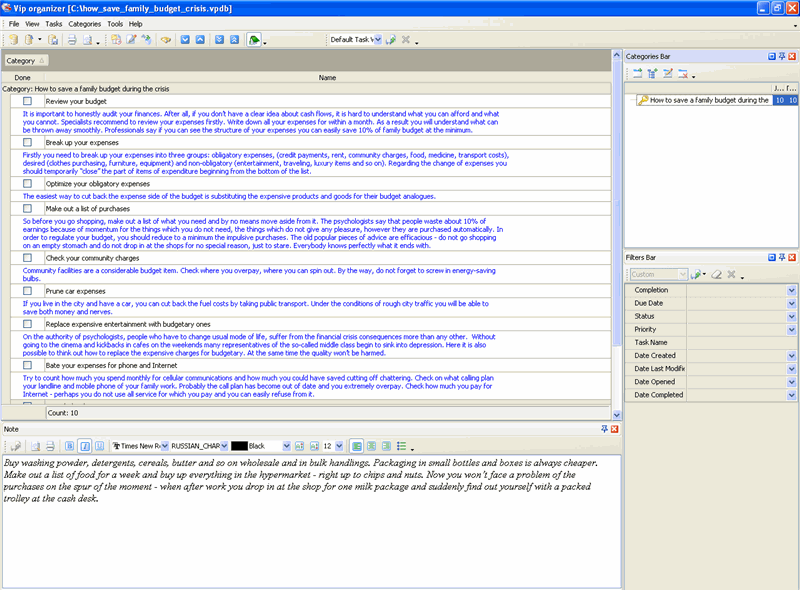
You can download this template in VIP Organizer or VIP Team To Do List database format.

You can order complete (full) checklist or all complete (full) checklists in convenient MS Word and PDF printable format. BUY NOW! 

HowSaveFamilyBudgetCrisis.zip 3,5 Kb


Review your budget

It is important to honestly audit your finances. After all, if you don't have a clear idea about cash flows, it is hard to understand what you can afford and what you cannot. Specialists recommend to review your expenses firstly. Write down all your expenses for within a month. As a result you will understand what can be thrown away smoothly. Professionals say if you can see the structure of your expenses you can easily save 10% of family budget at the minimum.

Break up your expenses

Firstly you need to break up your expenses into three groups: obligatory expenses, (credit payments, rent, community charges, food, medicine, transport costs), desired (clothes purchasing, furniture, equipment) and non-obligatory (entertainment, traveling, luxury items and so on). Regarding the change of expenses you should temporarily "close" the part of items of expenditure beginning from the bottom of the list.

Optimize your obligatory expenses

The easiest way to cut back the expense side of the budget is substituting the expensive products and goods for their budget analogues.

Make out a list of purchases

So before you go shopping, make out a list of what you need and by no means move aside from it. The psychologists say that people waste about 10% of earnings because of momentum for the things which you do not need, the things which do not give any pleasure, ...

You can order complete (full) checklist or all complete (full) checklists in convenient MS Word and PDF printable format. BUY NOW! 

Software


  Products *Solutions* Download Buy Support Contact My Account 

  Copyright © 2004 - 2010 VIP Quality Software, Ltd. All Rights Reserved.

 
Legal Information
Task Management Software
Task Management Guide